Skip to content
Back to archive

Archive / 2012

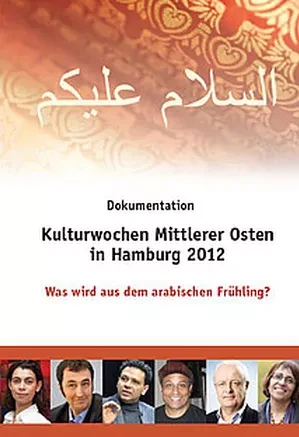
Arab Cultural Weeks 2012

The Middle East Cultural Weeks took place in Hamburg from 10 to 30 April 2012. The organisers were Dr Atef Botros, Dr Detlef Görrig, Dr Mohammed Khalifa, Hanna Lehming and Martina Severin-Kaiser. Upheavals and new beginnings across the Arab world were in full swing when the team began planning a new series in spring 2011. It was clear that this programme could not simply be an encounter with another culture. Unexpected developments from Tunisia to Yemen held the world's attention. People in these countries emerged as courageous, self-confident actors, while new cultural production seemed to appear from nowhere, from protest placard slogans to new films. The cultural weeks sought to make room for these developments: to introduce and present them, ask questions and discuss them. They particularly wanted to hear from people directly or indirectly involved in or affected by the upheavals: speakers from the Middle East who travelled to Hamburg and migrants following events in their countries of origin with excitement, joy and concern. The project comprised 28 public events on Middle Eastern culture, religion and politics, including fifteen film screenings, film discussions and family activities. For the Middle East Cultural Weeks in Hamburg 2012, the municipal Metropolis cinema offered its own programme, including some brand-new Middle Eastern films and conversations with filmmakers. Panels, workshops and lectures explored these questions: What do Islam, Islamism and secularism mean in the Arab world today? Are there new opportunities for interfaith dialogue? Do liberalisation, democratisation and Islamism mean the same things in Arab societies today as they do in the West? How does the “Arab Spring” affect religious freedom and the protection of minorities? What roles do Arab women play between Islamism and revolution? What role does Turkey play in the Middle East? According to the draft concept, the aim was “to promote intercultural competence and understanding through varied and comprehensive engagement with the Middle East, its culture, society and religion”. The series also sought to contribute to “development education for the Hamburg public through the organisation and staging of intercultural dialogues”. That the 2012 cultural weeks fully achieved this was primarily thanks to the people of the Middle East themselves. Their courageous new beginnings and imaginative expression across different media and cultural forms profoundly challenged prevailing images here and called for much more intensive, precise engagement with the region.

Arab Cultural Weeks 2012

The Middle East Cultural Weeks took place in Hamburg from 10 to 30 April 2012. The organisers were Dr Atef Botros, Dr Detlef Görrig, Dr Mohammed Khalifa, Hanna Lehming and Martina Severin-Kaiser. Upheavals and new beginnings across the Arab world were in full swing when the team began planning a new series in spring 2011. It was clear that this programme could not simply be an encounter with another culture. Unexpected developments from Tunisia to Yemen held the world's attention. People in these countries emerged as courageous, self-confident actors, while new cultural production seemed to appear from nowhere, from protest placard slogans to new films.

The cultural weeks sought to make room for these developments: to introduce and present them, ask questions and discuss them. They particularly wanted to hear from people directly or indirectly involved in or affected by the upheavals: speakers from the Middle East who travelled to Hamburg and migrants following events in their countries of origin with excitement, joy and concern.

The project comprised 28 public events on Middle Eastern culture, religion and politics, including fifteen film screenings, film discussions and family activities. For the Middle East Cultural Weeks in Hamburg 2012, the municipal Metropolis cinema offered its own programme, including some brand-new Middle Eastern films and conversations with filmmakers. Panels, workshops and lectures explored these questions:

What do Islam, Islamism and secularism mean in the Arab world today?

Are there new opportunities for interfaith dialogue?

Do liberalisation, democratisation and Islamism mean the same things in Arab societies today as they do in the West?

How does the “Arab Spring” affect religious freedom and the protection of minorities?

What roles do Arab women play between Islamism and revolution?

What role does Turkey play in the Middle East?

According to the draft concept, the aim was “to promote intercultural competence and understanding through varied and comprehensive engagement with the Middle East, its culture, society and religion”. The series also sought to contribute to “development education for the Hamburg public through the organisation and staging of intercultural dialogues”. That the 2012 cultural weeks fully achieved this was primarily thanks to the people of the Middle East themselves. Their courageous new beginnings and imaginative expression across different media and cultural forms profoundly challenged prevailing images here and called for much more intensive, precise engagement with the region.